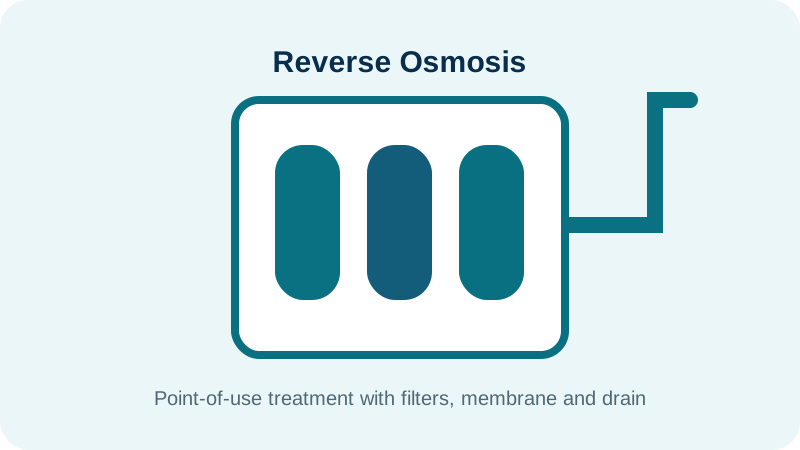
Reverse osmosis and water softeners solve different problems. A softener treats hardness minerals for the whole home; a typical residential reverse-osmosis system treats drinking and cooking water at one faucet and can reduce dissolved substances supported by the exact model’s certification. One is not a substitute for the other.
The correct comparison starts with a measured condition or clearly defined goal. Hard-water scale and a drinking-water reduction goal can exist in the same home, which is why some treatment plans use both technologies.
Quick comparison
| Decision point | Reverse osmosis | Water softener |
|---|---|---|
| Typical installation | Point of use, often under a sink | Point of entry on the home’s main water line |
| Main role | Model-specific dissolved-substance reduction for drinking water | Hardness reduction through ion exchange |
| Treats every fixture? | Usually no | Usually yes, subject to plumbing design |
| Changes hardness? | Can reduce minerals in a small drinking-water stream | Designed to reduce hardness throughout the home |
| Main upkeep | Prefilters, postfilter, membrane, tank and sanitation | Salt or potassium, resin/valve care and regeneration checks |
| Evidence to verify | Exact certified reduction claims and rated production | Hardness capacity, service flow and efficiency data |
Point-of-use versus whole-home role
Most residential reverse osmosis systems serve a dedicated faucet and sometimes a refrigerator. Water passes through pretreatment, a semipermeable membrane and often a postfilter before storage. Production is slower than an open faucet, so the tank and membrane capacity must match expected drinking-water use.
A water softener system is normally installed where water enters the house. Its service flow must support showers, laundry and other fixtures without excessive pressure loss. Ion-exchange resin captures calcium and magnesium and later regenerates with brine.
That placement difference matters. Whole-home RO is a specialized design involving storage, repressurization, drains and corrosion considerations; it should not be inferred from an under-sink product. Likewise, a softener does not create a dedicated certified drinking-water reduction claim.
What each system addresses
Choose a softener when measured hardness is the condition to be treated and the household wants outcomes associated with hardness reduction: less scale accumulation, different soap performance and reduced hardness load on water-using equipment. Sizing should use the actual hardness result, household demand, peak service flow and system capacity.
Choose RO when the household has a specific drinking-water goal that the exact model is independently certified or otherwise documented to address. The model listing—not “RO” as a category—controls the defensible substance claim. Pressure, temperature, incoming concentration, pretreatment and maintenance can affect output.
Neither technology should be sold as a universal safety upgrade. A symptom such as taste, odor, spots or color does not identify every cause. Start with current utility information and use fit-for-purpose water testing when the concern cannot be answered from official data or plumbing diagnosis.
When the systems pair
A combined design can make sense when the home has both significant hardness and a separate drinking-water objective. Softening before RO may reduce scale load on the membrane, but it changes the feed-water chemistry and adds its own maintenance. The system manufacturer should confirm compatibility and required pretreatment.
A common sequence is source water, necessary sediment or media treatment, softening where justified, and point-of-use RO. That is only a conceptual order. Iron, manganese, disinfectant, pressure, pH, microbiological concerns and the exact equipment can change the design.
Do not stack equipment merely because more stages appear better. Every stage adds pressure loss, service requirements and possible sanitation risks if neglected. Each component should have a documented purpose.
Maintenance and operating considerations
RO ownership can include sediment and carbon prefilters, a postfilter, membrane replacement, tank checks, sanitizing and wastewater sent to a drain. There is no safe universal replacement calendar; use the exact manual and performance indicators.
Softener ownership includes salt or potassium, brine-tank inspection, regeneration settings, valve service and possible resin replacement. Salt use depends on hardness load, demand and efficiency settings. A system that regenerates too often wastes water and salt; one that is undersized can allow hardness breakthrough.
Compare proposals on a common basis:
- exact model numbers and included components;
- required pretreatment and operating conditions;
- rated flow or daily production;
- expected pressure effects;
- drain, electrical and installation needs;
- recurring consumables and parts;
- sanitation and service responsibilities; and
- written warranty terms and exclusions.
Which one should you choose?
Choose a softener when the primary, measured problem is whole-home hardness. Choose RO when the primary goal concerns drinking and cooking water and the selected model has an appropriate claim. Consider both only when both goals are real and the complete treatment train is compatible.
Pause before buying when the water source is uncertain, an advisory is active, the issue appeared suddenly, only one fixture is affected or the proposal cannot identify exact model evidence. Those cases call for utility confirmation, plumbing diagnosis or testing before equipment selection.
A provider comparison packet should identify the utility or well source, hardness result, drinking-water goal, household use, pressure, installation constraints and preferred maintenance level.
Publisher disclosure: Water Filtration Houston is an independent publisher and provider-matching service, not the company that performs installation. Provider availability, equipment, installation requirements, credentials, warranty terms, and price must be confirmed directly with the selected provider.
Frequently asked questions
Does reverse osmosis soften water?
An RO membrane can reduce dissolved minerals in the limited stream it treats, but a typical under-sink system is not a whole-home softener and is not sized for household service flow.
Does a water softener make drinking water purified?
No. A softener primarily exchanges hardness ions. It should not be treated as proof of reduction for lead, PFAS, microorganisms or other named substances.
Should a softener be installed before RO?
It may be useful when hardness would scale the membrane, but compatibility depends on the exact systems and feed-water conditions. Follow manufacturer requirements and a documented design.
Which system costs more to maintain?
The answer depends on model, household demand, feed water and local service. Compare salt, filters, membranes, water use, electricity, sanitation and labor rather than relying on one generic estimate.