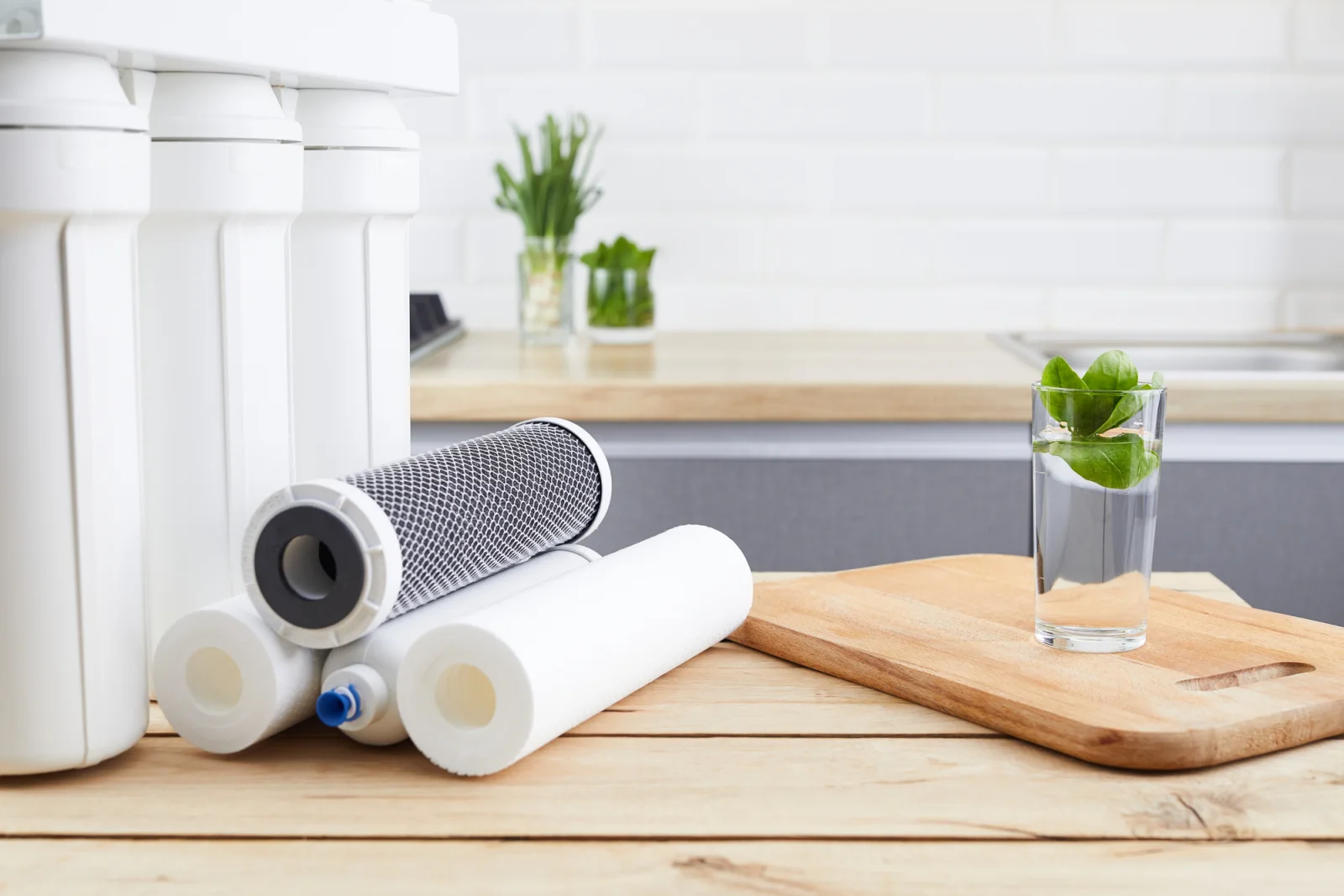
Direct answer: A defensible Houston whole-house filter price cannot be published from the project evidence as of July 21, 2026 because there is no dated set of comparable, itemized local quotes. Use a scope-based framework instead: treatment equipment and media, certified claims, household flow, plumbing modifications, installation access, startup, and ongoing maintenance. Compare proposals only after every provider prices the same documented need.
After normalizing the installation scope, use the ten-year water-treatment cost calculator to schedule consumables, service, financing, utilities, and planned major work year by year.
A price framework that produces useful quotes
| Cost component | What changes the scope | What a complete quote should show |
|---|---|---|
| Diagnosis and selection | Utility report, household testing, named concern | Report or result used and reason for each stage |
| Equipment and media | Sediment, carbon, specialty media, tank or cartridge design | Model numbers, media quantity, housings, controls |
| Performance evidence | Rated flow, capacity, substance-specific certification | Exact standard and reduction claim for the model |
| Plumbing | Main-line size, bypass, valves, pipe material, pressure | Materials, fittings, isolation, pressure-loss plan |
| Site work | Indoor/outdoor placement, access, slab or wall conditions | Labor, protection, mounting, drainage if required |
| Startup | Flushing, sanitation, pressure and leak checks | Commissioning tasks and baseline readings |
| Ownership | Cartridges, media, sanitation, service calls | Replacement intervals, current consumable pricing, labor |
| Risk allocation | Manufacturer, parts, media, and workmanship coverage | Separate written warranty terms and exclusions |
Why this guide does not quote a Houston average
The project’s current evidence package contains official water-selection guidance and local utility context, but it does not contain a normalized sample of Houston installation quotes. A publishable local range would need dated proposals built around the same water source, treatment goal, flow requirement, equipment class, plumbing scope, startup work, warranties, and recurring maintenance.
Until comparable local observations exist, homeowners should use this factor guide to solicit itemized proposals. The page can be updated with a dated range only after the source sample, specification, inclusions, and limitations are disclosed.
Equipment and media are the first cost variables
A whole-house system treats water at the point of entry, but that placement says nothing about what the equipment reduces. Cost begins with the confirmed problem.
A sediment stage may be selected for particles in a stated size range. Carbon or catalytic carbon may be considered for certain taste, odor, or disinfectant-related goals. Specialty media may be proposed for a named substance or chemistry condition. Every added stage should connect to a report, appropriate test, or clearly defined aesthetic goal.
Price changes with cartridge versus tank designs, media quantity, backwashing, treatment stages, automatic controls, pretreatment, consumables, and installation protection.
Ask why each stage exists, what it is rated to do, and what would happen if it were removed.
For a broader service overview, whole-house water filtration explains where point-of-entry treatment fits and why the selected media matters.
Certification and capacity affect both price and value
Independent certification can provide evidence that an exact model was tested for a specific claim under defined conditions. A quote should not rely on “NSF certified” as a complete statement. It should identify the model, standard, named substance or aesthetic claim, rated capacity, flow, and replacement conditions.
EPA cautions that current PFAS certifications may not demonstrate reduction to its newer drinking-water limits. A generic badge is not a guaranteed outcome.
Use the water filter certifications guide to prepare the model-specific questions that belong in a quote. A system without evidence for the buyer’s actual goal can be poor value at any price.
Flow rate and pressure drive system size
Whole-house filtration must support water used by several fixtures at once. The provider should estimate peak service flow from the property, not just cite a tank diameter or marketing label. Main-line size, incoming pressure, fixture count, occupancy patterns, irrigation or specialty uses, and simultaneous shower or appliance demand can all influence design.
Flow affects cost through housing size, tank size, valve selection, parallel configurations, media quantity, and piping. It also affects ownership: an undersized cartridge may load quickly, create pressure loss, and require frequent replacement. An oversized or unnecessarily complex design can add expense without improving the target claim.
Ask for complete-train service flow, expected pressure drop, and post-installation flow and pressure checks.
Plumbing and installation scope can outweigh the equipment difference
Two identical systems can have different installed scopes. Important variables include:
- access to the incoming main before branch distribution;
- pipe size and material;
- an existing loop, bypass, valves, and backflow conditions;
- available space and environmental exposure;
- drain and power requirements for automatic or backwashing equipment;
- penetrations, trenching, restoration, or old-equipment removal.
The authority having jurisdiction must be resolved from the property address. Greater Houston includes multiple cities, counties, utility districts, and unincorporated areas. A provider should not promise that no permit or inspection applies based only on a Houston mailing address.
A complete quote should separate equipment, standard installation labor, nonstandard plumbing, electrical or drain work, permits or inspection allowances, startup, and removal. Undefined phrases such as “complete installation” make proposals difficult to compare.
Houston source-water context changes the recommendation
Houston Public Works says its main system uses primarily surface water from regional river and reservoir systems, plus a smaller groundwater contribution that can increase during high demand. The utility’s service area is broad, and other Houston-area properties may have different public systems or private wells.
The City reports a TCEQ “Superior” rating. Treatment should be based on the actual source, current Consumer Confidence Report, premise plumbing, and goals—not a claim that all Houston water is unsafe. Taste, odor, and color may guide investigation but do not identify a safety problem by themselves.
Before paying for treatment, confirm the utility, read the current report, check active notices, and determine whether the issue occurs throughout the house or only at one fixture or on hot water. Plumbing or water-heater issues may call for diagnosis rather than a main-line filter.
Maintenance is part of the system cost
A whole-house filter is not a one-time purchase. Ownership cost can include sediment cartridges, carbon blocks, tank media, control-valve service, seals, sanitizing, monitoring, and labor. Backwashing units may also use water and electricity. The schedule depends on incoming water, usage, capacity, and manufacturer conditions.
Ask for a written maintenance table with:
- every consumable and its part number;
- replacement interval or capacity trigger;
- owner-performed versus technician-performed tasks;
- current dated parts and labor pricing;
- signs that call for service and the bypass procedure;
- consequences for performance and warranty if service is late.
Warranty terms should be separated
“Lifetime warranty” is not enough information. Request the written terms before purchase. Separate coverage for tanks, valves, housings, electronics, media, cartridges, labor, travel, shipping, and workmanship. Note registration requirements, required maintenance, water-chemistry exclusions, freeze or weather exclusions, transferability, and who administers a claim if the installer is no longer available.
A longer warranty is useful only when the covered parts, owner obligations, and service process are clear. Do not treat warranty language as proof of filtration performance.
Provider-vetting checklist
Use the same checklist with every bidder:
- What exact concern does each stage address?
- Which report, test, or observation supports it?
- What are the model numbers and media quantities?
- What is the certified listing and named reduction claim?
- What are the rated capacity, service flow, and pressure drop?
- How were household peak flow and main-line size determined?
- What plumbing, utilities, placement, and jurisdiction work is included?
- What startup, verification, consumables, and service visits are included?
- Which costs are equipment, labor, permits, startup, and future maintenance?
- What do the manufacturer and workmanship warranties actually cover?
Prepare a system-specific comparison
Collect the utility report, any relevant lab results, photos of the main and installation area, pipe size, pressure information, household and fixture count, and the precise problem you want solved. Give the same packet to each provider in the Houston provider directory, then request an estimate that itemizes the complete scope.
Use the property-specific quote benchmark worksheet to place up to three proposals onto the same scope, add documented allowances for excluded work, and keep unknown costs visibly unresolved.
Publisher disclosure: Water Filtration Houston is an independent publisher and provider-matching service, not the company that performs installation. Provider availability, equipment, installation requirements, credentials, warranty terms, and price must be confirmed directly with the selected provider.
Frequently asked questions
What is the average cost of a whole-house water filter in Houston?
This project does not have a dated, normalized set of comparable local quotes, so it does not publish an invented Houston average. Equipment class, claims, flow, plumbing, installation, and maintenance must be standardized before a range is meaningful.
How often will a whole-house filter need service?
The interval depends on the model, media or cartridge capacity, incoming water, household use, and pressure conditions. Follow manufacturer requirements and ask the provider for a written schedule rather than relying on a generic annual claim.
Should I get a water test before requesting quotes?
Review the current utility report first. Use appropriate testing when the concern is household-specific or health-related, and distinguish field screening from accredited-laboratory analysis. Quotes should identify the evidence used for each proposed stage.
Sources
- Houston Water — Houston Public Works
- Drinking Water Taste, Odor and Color — Houston Public Works
- About Choosing Home Water Filters — Centers for Disease Control and Prevention
- WaterSense Guide to Selecting Water Treatment Systems — U.S. Environmental Protection Agency
- Identifying Drinking Water Filters Certified to Reduce PFAS — U.S. Environmental Protection Agency
Final next step: Compare only itemized, system-specific estimates from providers whose credentials and service scope have been independently verified. WaterFiltrationHouston.com is the publisher rather than the contractor, and this offline cost guide is not a quote or promise of availability.