Houston’s public tap water is regulated drinking water, and Houston Public Works publishes annual Consumer Confidence Reports describing monitoring and compliance for the systems covered by each report. That does not create a timeless guarantee for every faucet: current advisories, the exact utility serving the address, premise plumbing and a household-specific concern still matter.
The safest answer is source-specific and current. Greater Houston includes the City of Houston, municipal utility districts and other public systems, plus some private wells. Do not apply one city report to an address served by a different supplier.
Start with the exact public water system
Find the current bill or utility lookup for the property. Then open that supplier’s latest Consumer Confidence Report and any current notices. A report summarizes regulated monitoring during a stated period; it is not a live measurement from every home.
Houston Public Works says the city’s main system uses both surface water and groundwater. Source, treatment plant and distribution conditions can differ across a large service area. The Houston water quality guide explains how to connect official information to a specific address without turning one result into a citywide claim.
If a boil-water notice or other advisory is active, follow the issuing authority’s instructions. Evergreen website advice cannot override a current emergency notice.
What utility compliance does tell you
Public water systems must monitor regulated substances and report required information under federal and Texas rules. The annual report can show source-water context, regulated results, violations or notices, and required educational language. TCEQ oversees public drinking-water regulation in Texas.
This official information is the starting point for a general safety question. It is stronger evidence than taste, a social-media post or a sales demonstration. Read the report date, system name, units and comparison value before drawing a conclusion.
What the report cannot settle for every home
A utility report generally represents system monitoring—not a sample from one kitchen tap after water passed through a service line, building plumbing, water heater and fixtures. Plumbing age, corrosion, stagnant water, cross-connections, recent repairs and a single failing fixture can change what a household experiences.
Lead is a clear example of why premise plumbing matters. Water can meet treatment requirements at the system level while lead risk still depends partly on service lines and household plumbing materials. A concern about a specific property may require source records, plumbing investigation and an appropriate sample plan.
A report also cannot diagnose a sudden event that occurred after the reporting period. Contact the utility when multiple nearby properties experience the same new issue or when an advisory may be involved.
Taste, odor and color do not equal a safety result
Chlorine taste, earthy or musty odor, discoloration and visible particles can have several causes. Some are aesthetic and temporary; others warrant prompt utility or plumbing attention. Sensory changes cannot identify every substance, and clear water is not proof that no concern exists.
Houston Public Works maintains taste, odor and color guidance. Use it with the pattern of the issue:
- One faucet only: inspect the aerator, fixture and nearby plumbing.
- Hot water only: investigate the water heater.
- Hot and cold water throughout the home: check utility information and neighbors before selecting treatment.
- Sudden widespread change: contact the supplier and review advisories.
- Private well: use a well-specific testing and maintenance plan rather than a city report.
Do not drink water that is subject to an active warning contrary to the authority’s instructions.
When household testing is appropriate
Testing is most useful when it answers a defined question that official information and plumbing context cannot resolve. Examples include a private well, a property-specific lead concern, persistent changes at one address, a health-department recommendation or verification of treatment performance.
Use the water testing guide to choose a laboratory, analyte panel and sampling method. The method matters: first-draw and flushed samples answer different questions, and a broad “water test” may omit the substance of concern.
Avoid drawing a safety conclusion from total dissolved solids alone. TDS reflects dissolved ionic content but does not identify each substance or determine whether a regulated contaminant exceeds a health-based value.
Should a Houston home install a filter?
Not every compliant public-water home needs the same treatment. A filter should have a defined purpose supported by source information, testing or a documented aesthetic goal. The CDC recommends identifying what you want to remove before choosing a filter.
For a named substance, verify the exact model in an independent certifier’s directory. The water filter certifications guide explains why a logo or component certification does not prove every reduction claim. Capacity, flow and required replacement intervals are part of the claim.
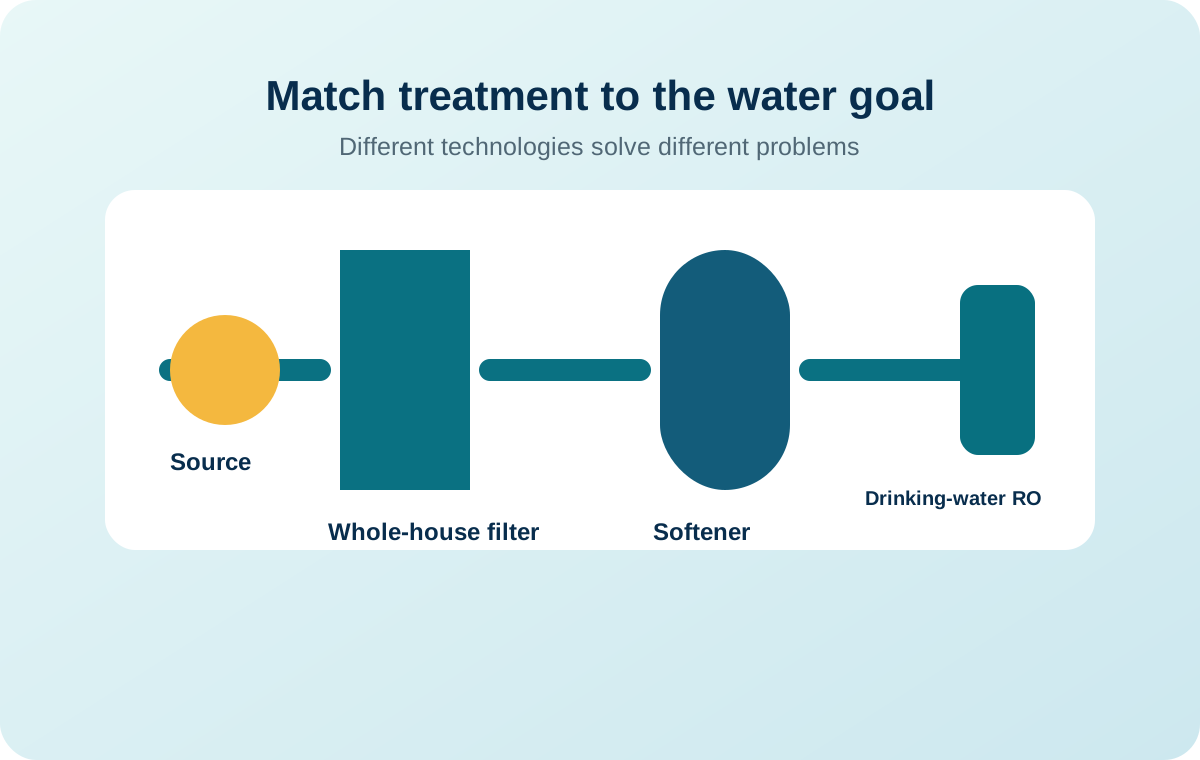
A whole-house carbon system may be considered for a supported whole-home taste or odor goal; point-of-use filtration or RO may fit a specific drinking-water objective. Softening addresses hardness rather than general safety. No category should be represented as removing “everything.”
A defensible decision path
- Identify the utility or well source serving the property.
- Review the latest report and current advisories.
- Determine whether the concern is systemwide, hot-water-only or fixture-specific.
- Contact the utility or a qualified plumber when the pattern points there.
- Test only with a method suited to the unresolved question.
- Compare exact treatment models against the verified goal.
Use this sequence before discussing equipment with any provider. A directory record does not replace the current utility report, an active notice, or fit-for-purpose testing.
Publisher disclosure: Water Filtration Houston is an independent publisher and provider directory, not the installer. This guide does not replace a property review, fit-for-purpose testing when needed, exact manufacturer documentation, or a written provider proposal.
Frequently asked questions
Can I tell whether Houston tap water is safe by taste?
No. Taste and odor can be important observations, but they do not identify every substance or establish compliance or safety.
Does boiling remove all drinking-water concerns?
No. Boiling addresses certain microbiological situations when authorities instruct it, but it can concentrate some dissolved substances. Follow the exact advisory.
Is bottled water automatically safer?
Not as a universal rule. Bottled water and public tap water are regulated under different frameworks, and product quality, storage and source vary.
Should I test for lead?
Consider property-specific testing when plumbing materials, service-line information, household circumstances or official guidance indicate a concern. Use an appropriate sampling protocol and accredited laboratory.