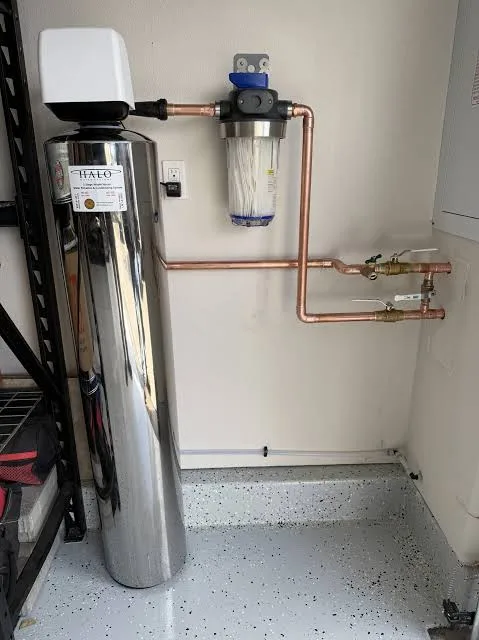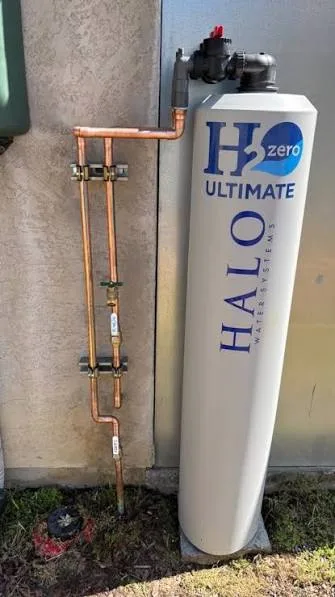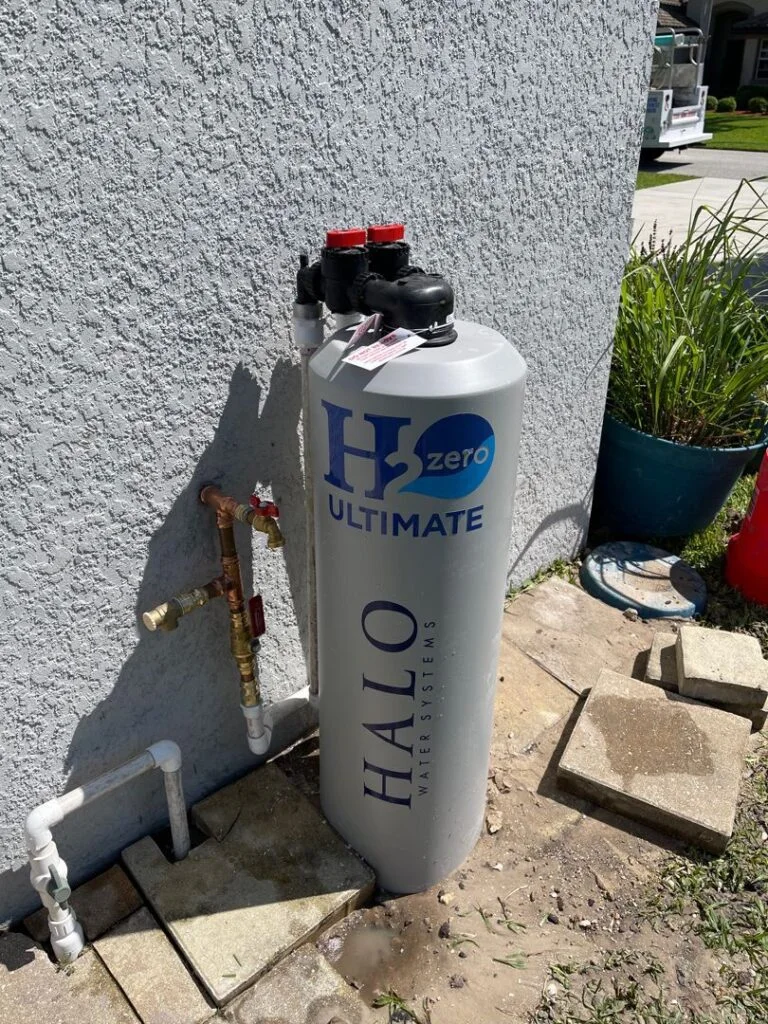
Houston water-treatment service guide

Water Softeners and Filtration in Sugar Land, TX

Compare Sugar Land softeners, filtration, RO, and testing using the correct City system, current hardness evidence, and exact model claims.

Quick answer: A Sugar Land water softener or filter should be selected only after confirming which City system serves the property. Sugar Land operates the Main system plus three independent systems serving Greatwood, New Territory, and RiverPark. The City publishes different hardness ranges for each, while the Main system blends treated surface water from Oyster Creek and the Brazos River with groundwater. Those ranges are source-system context—not property results or automatic softener settings—so verify the current City information and measure at the home before sizing.

Sugar Land cannot be reduced to one “local water” number. The City’s own water-quality page separates four systems, publishes system-specific reports and notices, and explains why hardness can vary. That local structure should shape every treatment decision: identify the system first, distinguish a utility report from a tap sample, and match a measured goal to an exact equipment claim.

This is a prelaunch planning page. Sugar Land installation territory, projects, reviews, prices, appointment availability, and response times have not been verified for publication. Online request routing is inactive. The contact page shows current contact options, but an online submission does not book service or confirm coverage.

Which Sugar Land water system serves the property?

The City says it operates a Main system serving the rest of Sugar Land and three independent systems for Greatwood, New Territory, and RiverPark. A resident should use the report, notice, and system data that match the actual service address rather than treating all four as interchangeable.

City-published system Source and hardness context What must still be verified
Greatwood Independent City system; current City screening range is 2.0–9.6 grains per gallon Current report, notices, and hardness at the property
Main Treated surface water from Oyster Creek and the Brazos River blended with groundwater; current City screening range is 2.0–16.4 gpg Whether the address is on Main, current blend/system conditions, and property measurement
New Territory Independent City system; current City screening range is 2.9–10.9 gpg Current report, notices, and hardness at the property
RiverPark Independent City system; current City screening range is 6.4–9.1 gpg Current report, notices, and hardness at the property

These are city-published ranges, not test results from a particular house. They should be rechecked on the City’s official water-quality page before use because reports, notices, operations, and published values can change. Even within a published range, selecting the high end, low end, or midpoint without sampling can distort softener capacity and regeneration settings.

The City currently lists a 2025 Water Quality Report and current notices on its water-quality page. Read the applicable report as a whole, including reporting period, units, sampling notes, system sections, and any notice that applies only to a particular system. A report summarizes public-system monitoring; it does not account for every service line, building pipe, fixture, water heater, period of stagnation, or point-of-use device.

Main system blending matters

Sugar Land states that its Main Water System uses treated surface water from Oyster Creek and the Brazos River and blends it with groundwater before distribution. The City therefore tells readers to consider the system as a whole and view hardness as a range.

That operational fact has practical consequences:

  • a single “Sugar Land average” can erase the system and source context;
  • a historical result may not represent current conditions;
  • a softener should be programmed from a recent property measurement, with a plan for verification if source conditions shift;
  • whole-house filter design should use the current disinfectant and source information for the Main system, not an assumption copied from another city; and
  • a change in taste or odor should first be checked against current City notices and the affected fixtures before it is treated as a permanent condition.

The three independent systems should not inherit Main system claims. Greatwood, New Territory, and RiverPark have their own system context and report sections. Likewise, a result from one of those systems should not be presented as evidence for Main.

The broader Houston-area location hub explains why utility identity and provider territory are separate throughout the region. In Sugar Land, the four-system structure makes the difference visible inside one municipal utility.

Turn the observation into a testable question

Treatment selection improves when the concern is described precisely.

Mineral residue or scale

Ask whether deposits appear after water evaporates, whether hot-water equipment shows buildup, and whether the condition is present throughout the property. Then obtain a current hardness measurement in stated units. Hardness primarily reflects calcium and magnesium and may affect scale and soap behavior, but hard water is not automatically a health hazard. Use the water-softener guide to compare ion-exchange equipment after measurement.

Taste or odor

Record whether the issue occurs in cold water, hot water, or both; at one fixture or all fixtures; and continuously or after stagnation. Check current City notices. A hot-only odor may involve the water heater, while a single-faucet issue may involve that fixture or local plumbing. Sensory observations can narrow the investigation but do not identify every compound or prove that the water is unsafe.

Sediment, color, or pressure change

Determine when the change began, whether neighbors are affected, and whether there was utility or plumbing work. Inspect existing cartridges and valves if pressure declined after a filter. A temporary distribution event should not automatically trigger a permanent equipment purchase.

Use current official information and a fit-for-purpose water-testing pathway. A utility report, field screen, and accredited laboratory analysis answer different questions. Health-related decisions require appropriate methods, sample handling, detection limits, and interpretation; a general sales demonstration is not a substitute.

Sugar Land PFAS evidence without fear-based claims

Sugar Land maintains a dedicated official PFAS page. It states that the City’s systems monitored under EPA’s Fifth Unregulated Contaminant Monitoring Rule between February 2023 and February 2024. The City reports no PFAS detections in Greatwood, New Territory, or RiverPark during that monitoring and reports detections of eight PFAS compounds in the Main system. The City also states that, based on its UCMR5 results, its systems would comply with the new PFAS maximum contaminant levels taking effect in 2029.

That summary must stay attached to its monitoring period, systems, compounds, units, and the City’s current interpretation. “Detection” is not the same as a violation, and an older nondetection is not a permanent guarantee. Readers should check the current City PFAS page and current report rather than relying indefinitely on this summary.

If PFAS reduction is a household goal, do not buy from a generic “removes forever chemicals” claim. Verify the complete model in a current independent certifier listing, the named PFAS claim, rated capacity, flow and operating conditions, and replacement schedule. EPA notes that PFAS filter performance and certifications are model-specific. A reduction claim is not a promise of zero concentration, and treatment should not be used to misstate the public system’s compliance status.

Choose a service pathway by purpose

Water softening

Ion exchange is the relevant pathway for reducing measured calcium and magnesium hardness. It is not a general filter for PFAS, disinfectants, sediment, or every dissolved substance. Sugar Land’s official ranges help explain why residents ask about softening, but they are too broad to serve as automatic programming values. Review water-softener options only after the system and current property hardness are established.

Whole-house filtration

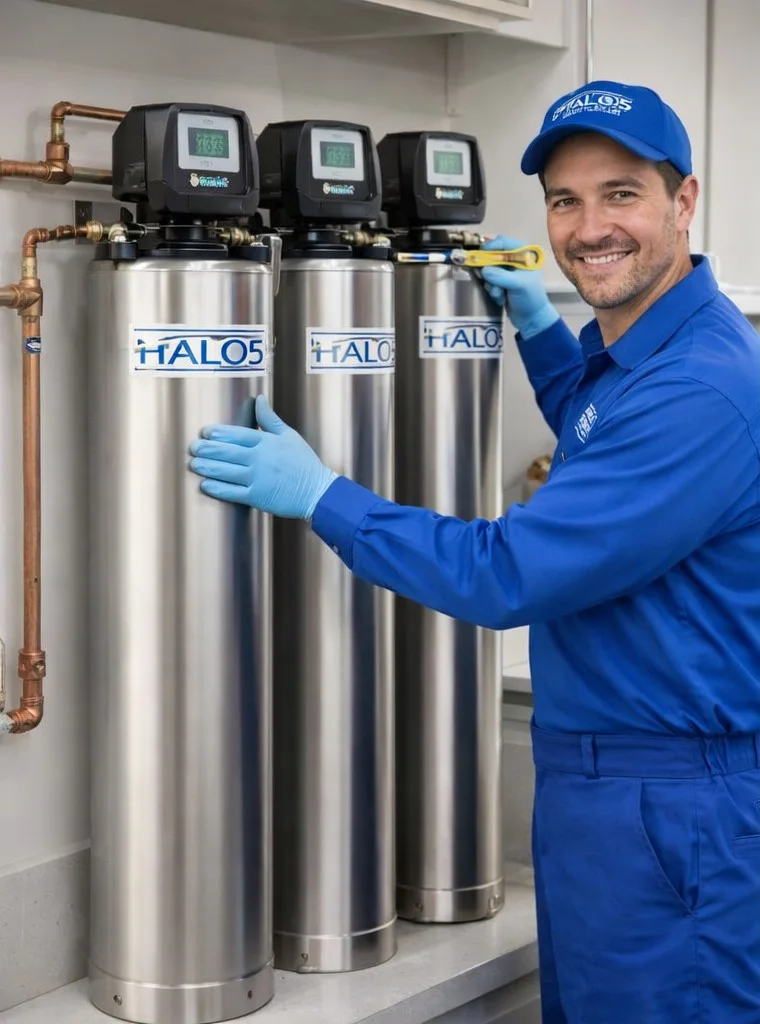
A whole-house water filter treats water at the point of entry, but placement alone says nothing about performance. Name the target—aesthetic chlorine concerns, sediment, or another supported reduction goal—then match media, contact time, service flow, pressure drop, capacity, and certification to that target. Main, Greatwood, New Territory, and RiverPark context should not be blended into one design assumption.

Reverse osmosis

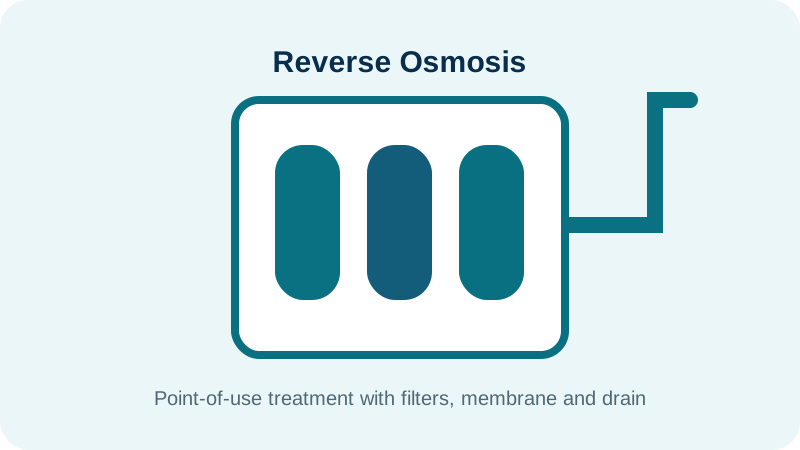
A typical under-sink reverse-osmosis system treats drinking and cooking water at one fixture. It should not be described as whole-home treatment. Compare exact claims, complete-system production, storage or tankless delivery, recovery or reject-water characteristics, feed-pressure requirements, prefilters, postfilters, sanitation, monitoring, and membrane replacement.

Water testing

Use water testing when the decision requires a current result from the property. Hardness screening can support softener sizing. Targeted accredited-lab analysis is more appropriate when a health-related contaminant question cannot be answered from current official information. Define the question before choosing the panel.

Softener sizing for a variable range

Sugar Land’s system-specific ranges make transparent sizing especially important. A written recommendation should show:

  1. confirmed City system and current report;
  2. raw hardness measured at the property, with date, location, method, and units;
  3. any tested iron or other factor the designer says changes capacity;
  4. occupants and realistic daily use;
  5. peak simultaneous flow from showers, tubs, appliances, and other fixtures;
  6. pipe size and available pressure;
  7. resin volume and usable capacity at the proposed salt setting;
  8. reserve and regeneration assumptions;
  9. bypass, drain, air gap, overflow, and electrical details; and
  10. a startup and later verification plan.

Do not compare systems only by an oversized grain-capacity label. Ask how much resin is present, which salt dose supports the stated capacity, how often regeneration is expected, and what service flow the unit can deliver without unacceptable pressure loss. A model can be poorly matched even if its headline capacity appears generous.

For Main-system properties, ask how the recommendation will be checked if the blended source or measured hardness changes. For Greatwood, New Territory, and RiverPark, use that system’s current evidence rather than Main’s wider range.

Whole-house filter sizing and claims

Whole-house filter proposals should disclose the contaminant or aesthetic goal, media type and quantity, service-flow assumptions, expected pressure drop, backwash or cartridge requirements, water and drain use where relevant, and performance verification. Where contact time governs performance, tank diameter and media volume matter; a tank label by itself is insufficient.

Model-level questions include:

  • Is the complete model independently listed for the exact claim?
  • Does the listing apply at the proposed flow and capacity?
  • Are the source water, pH, temperature, and pressure within operating limits?
  • Is pretreatment required?
  • What triggers cartridge or media replacement: volume, elapsed time, pressure drop, test result, or another indicator?
  • Are replacement parts proprietary and currently obtainable?
  • How is treated-water performance checked after startup and maintenance?

“NSF certified” is incomplete unless the listing, standard, named claim, capacity, and conditions are identified. A component’s material-safety listing does not prove that the assembled system reduces a contaminant.

Installation scope depends on the property

Utility identity does not automatically identify the authority having jurisdiction for every installation detail. Confirm the applicable municipal, plumbing, backflow, drain, permit, and inspection requirements for the exact address and scope. Do not accept a metro-wide claim that a permit is never needed.

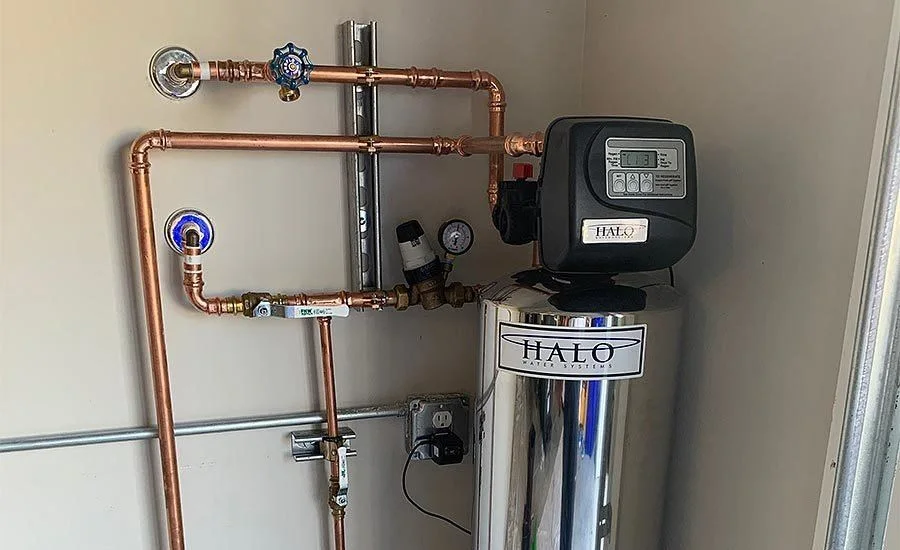
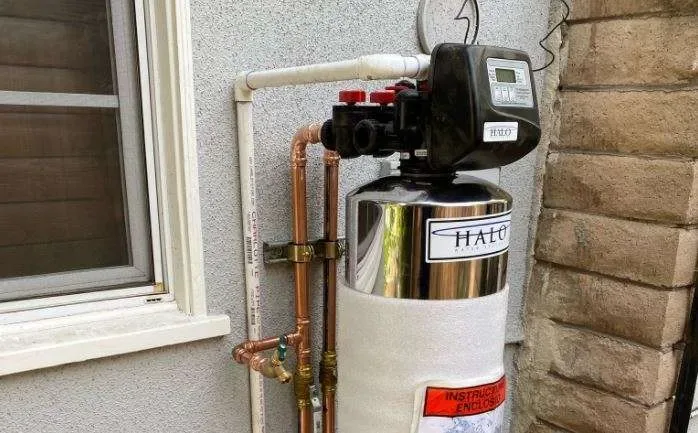
Ask for a written scope that identifies the main-line tie-in, pipe materials, isolation and bypass valves, drain and air gap, backflow provisions, power, weather and flood protection, untreated branches, startup settings, cleanup, removal, exclusions, and post-treatment checks. If equipment will be outdoors, the proposal should address environmental exposure based on manufacturer instructions rather than an improvised enclosure.

No Sugar Land installation territory has been verified through this page. Before work is scheduled, confirm the responsible company, relevant license or exemption, insurance, territory, permit responsibilities, and exact equipment supplied. City water data is not evidence of private-provider qualifications.

Plan maintenance before installation

Maintenance is part of system performance, not an afterthought.

For a softener, ask about salt replenishment, brine-tank inspection, bridging, cleaning, programming review, leak checks, and eventual resin or valve service. If source hardness can vary, establish when raw and treated hardness will be rechecked.

For a cartridge filter, obtain exact cartridge numbers, rated capacity, pressure-drop guidance, change procedure, O-ring care, housing sanitation, and disposal steps. For a backwashing media tank, ask about water use, drain requirements, automatic cycles, testing, and media end-of-life. For RO, document prefilter and postfilter changes, membrane monitoring, sanitation, tank checks, leak inspection, and how rejection performance will be evaluated.

“Maintenance-free” should prompt questions about automatic backwash, batteries, monitoring, media exhaustion, sanitation, and warranty-required service. Request current written consumable prices and labor exclusions, but do not interpret one proposal as a Sugar Land market average.

Compare proposals without a made-up local price

Water Filtration Houston has not collected a normalized set of Sugar Land installation quotes for publication, so this page does not claim an average price. Under-sink RO, a softener, a cartridge filter, a media tank, and a multi-stage whole-home system are different scopes.

For a fair comparison, ask each provider to quote the same:

  • complete model and treatment stages;
  • test results and design assumptions;
  • pipe size, peak flow, pressure, and installation location;
  • plumbing, bypass, drain, power, backflow, and site work;
  • permits and inspections where applicable;
  • startup, programming, and post-treatment verification;
  • consumables and expected maintenance;
  • removal, disposal, and cleanup; and
  • equipment, media, parts, labor, and workmanship warranty terms.

Separate required work from upgrades. A low total may omit a critical part of the scope; a high total may include options that do not address the measured goal. Compare evidence and exclusions, not just package names.

Prelaunch service status

Sugar Land is a priority city in the Houston service-area editorial plan. That status does not indicate provider territory. Matching remains inactive, and no local projects, reviews, qualifications, prices, availability, or response commitments have been verified.

Use contact to send a question or express interest. A submission does not identify the property’s utility, book testing or installation, select a provider, confirm coverage, generate a quote, or create any obligation to buy.

Frequently asked questions

Does every Sugar Land home receive the same water?

No. The City operates the Main system plus independent systems for Greatwood, New Territory, and RiverPark. Confirm the system serving the property and use its current report and notices.

What hardness does the City publish for Sugar Land systems?

The City currently publishes 2.0–9.6 gpg for Greatwood, 2.0–16.4 gpg for Main, 2.9–10.9 gpg for New Territory, and 6.4–9.1 gpg for RiverPark. These are city-published screening ranges, not property test results; recheck the current City page and measure before sizing.

Why can Main system hardness vary?

The City explains that Main blends treated surface water from Oyster Creek and the Brazos River with groundwater. Source and well variation are reasons to view hardness as a range rather than assume one permanent setting.

What does Sugar Land’s official PFAS information say?

The City reports UCMR5 monitoring from February 2023 through February 2024, no PFAS detections in Greatwood, New Territory, or RiverPark, and detections of eight PFAS compounds in Main. It also says its systems would comply with the PFAS limits taking effect in 2029 based on those results. Check the current official page for updates.

Should I choose a softener, filter, or RO system?

Choose by measured purpose. A softener reduces calcium and magnesium hardness; a whole-house filter needs a named point-of-entry claim; and typical under-sink RO treats drinking and cooking water at one fixture. A combination needs separately supported stages.

Can I schedule Sugar Land service through this website now?

No. Water Filtration Houston remains in prelaunch, Sugar Land installation territory has not been confirmed for this page, and online request routing is inactive. Contacting the site does not verify territory, price, availability, response time, or appointment status.

Sources

Online request status

Online consultation requests are not active yet.

Water Filtration Houston is accepting direct phone conversations while the online request workflow, consent language and delivery checks are completed.

Call the company directlyNo personal-information form is displayed hereThis panel does not submit a request
Call (281) 768-4021