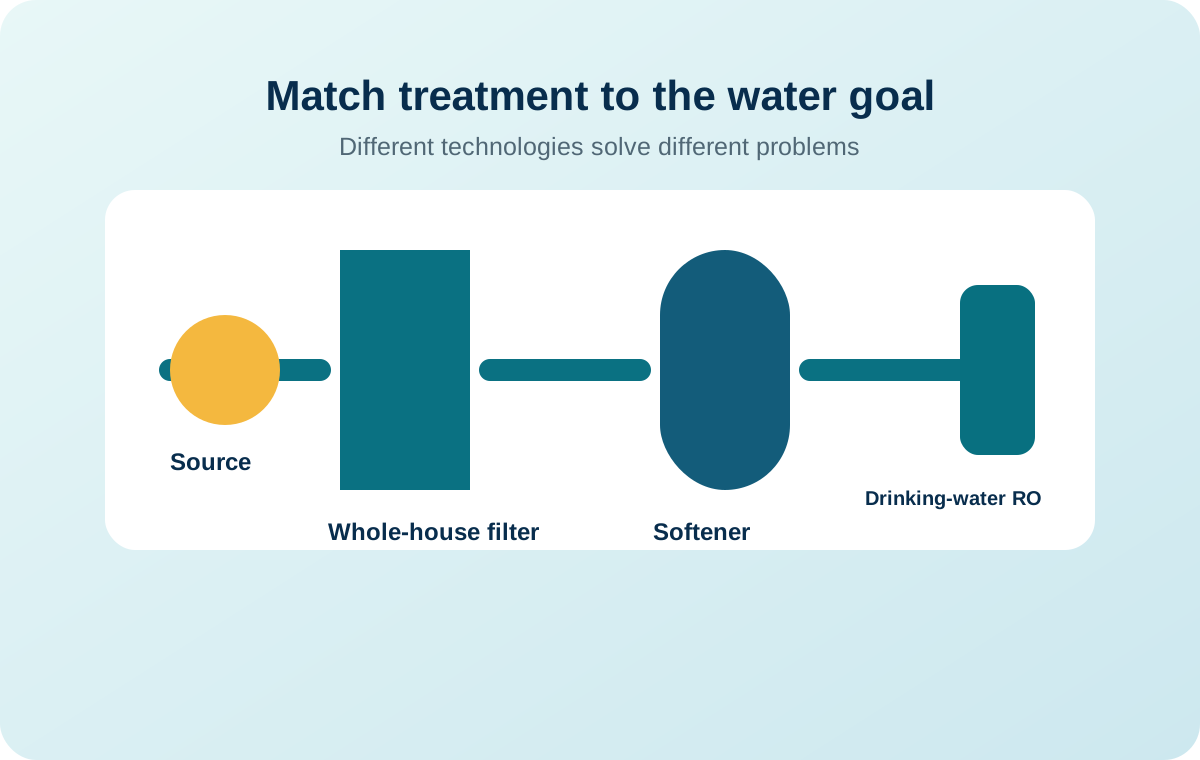
Private-well treatment should be test-first and designed for the actual well, pump, storage, flow, and laboratory findings. No single package safely covers every possible microbial, mineral, or chemical condition. Confirm testing, provider capability, exact treatment scope, and ongoing monitoring directly.
Use this guide to define the question before comparing equipment. For a broader starting point, review home water-treatment options, use the city water vs well water decision tree to confirm the correct evidence path, and use water testing when a property-specific concern needs evidence.
Quick decision table
| Decision point | What to compare | Important limit |
|---|---|---|
| Define the goal | State the condition or outcome in measurable terms | Do not start with a product label |
| Verify the evidence | Use the correct utility report, test or model listing | Keep system, date and location context |
| Compare the scope | Match flow, installation and upkeep | Confirm exact equipment and exclusions |
Private-well test-first process
This part of the decision should be documented for well water treatment systems for greater homes. Ask what was observed or measured, what assumption is being made and how the proposed system changes that condition.
Get the answer in writing with exact model data and exclusions. Broad labels such as premium, purification, maintenance-free or chemical-free do not replace a measurable scope.
Common treatment categories without assumptions
This part of the decision should be documented for well water treatment systems for greater homes. Ask what was observed or measured, what assumption is being made and how the proposed system changes that condition.
Get the answer in writing with exact model data and exclusions. Broad labels such as premium, purification, maintenance-free or chemical-free do not replace a measurable scope.
Flow and pump and storage
Sizing must preserve usable service flow while meeting the treatment method’s contact, pressure or regeneration requirements. Count likely simultaneous fixtures, confirm pipe size and static/dynamic pressure, and review manufacturer pressure-drop data at the design flow.
Oversizing is not automatically safer: it can add cost, create stagnant capacity or cause inefficient cycling. Undersizing can produce pressure complaints, premature exhaustion or breakthrough. Ask the provider to show the inputs and model data used.
Disinfection and safety
This part of the decision should be documented for well water treatment systems for greater homes. Ask what was observed or measured, what assumption is being made and how the proposed system changes that condition.
Get the answer in writing with exact model data and exclusions. Broad labels such as premium, purification, maintenance-free or chemical-free do not replace a measurable scope.
Professional design
Prepare the well, pump, storage, property, laboratory findings, flow demand, and treatment-goal details before requesting a scope.
Confirm provider identity, qualifications, territory, exact model, claims, installation boundaries, price, permits, schedule, and warranties directly.
Maintenance
Follow the installed model’s current instructions. Incoming water, household use, pressure, temperature, capacity and maintenance quality can shorten or extend service compared with a generic calendar interval.
Keep a record of dates, parts, pressure or test readings and unusual symptoms. Shut off water and use qualified help for active leaks, damaged electrical components, sanitation concerns or work beyond the owner’s instructions.
Prepare a provider comparison
Give each provider the same well, property, laboratory, flow, and treatment-goal details before requesting a scope.
Confirm identity, qualifications, territory, exact model, claims, installation boundaries, price, permits, schedule, and warranties directly before selecting a provider.
Related planning guides
Directory note: Water Filtration Houston is the publisher, not the testing laboratory or installer. Private-well testing and treatment capability must be confirmed directly with the responsible provider.
Frequently asked questions
What is the first step before choosing well water treatment systems for greater houston homes?
Identify the utility or well source, define the goal and use the current report or targeted testing when the concern cannot be resolved from official information.
Can a symptom identify the right system?
No. Taste, odor, color, spotting, scale or pressure changes can narrow the questions, but they do not identify every cause or establish safety.
How should I compare provider proposals?
Compare the same model capability, flow, installation scope, exclusions, consumables, maintenance, warranty and total price. Ask providers to explain material differences.
Can I request an assessment through this website now?
No. Online consultation requests are not currently available, and this website does not collect or route personal information.